

Robotics
Robotics

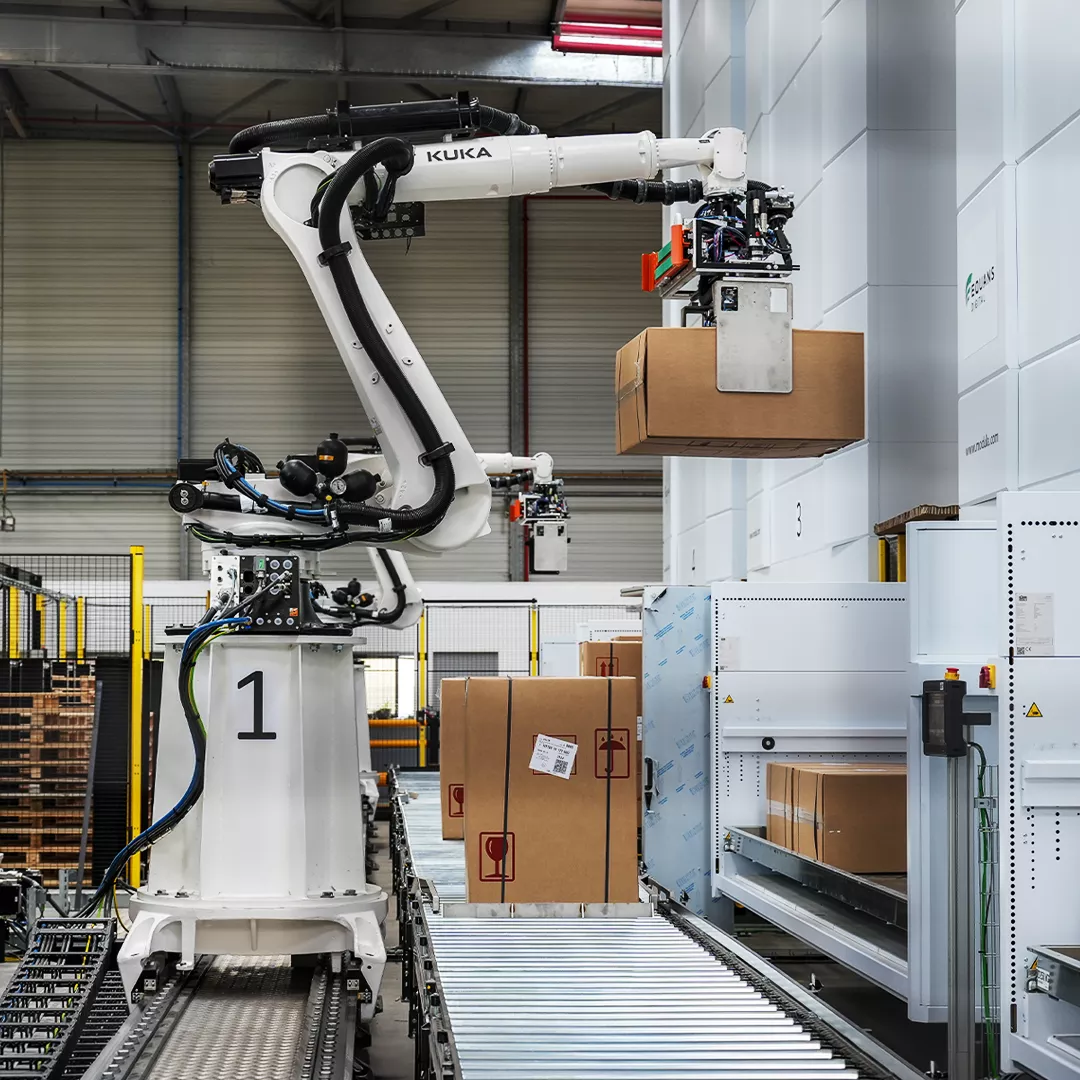
Automate where it delivers value
Increase production with the same resources. Shorten lead times. Maintain consistent quality. Attract and retain skilled employees. All while keeping energy and material consumption under control without sacrificing flexibility. For industrial companies, these challenges rarely occur in isolation. Together, they place increasing pressure on production and internal logistics.
Robotics by Equans Digital therefore starts with the process, not the technology. Existing machines, legacy systems and manual operations often create bottlenecks that limit performance today. By identifying these constraints, it becomes clear where automation and Robotics can deliver the greatest impact on capacity, quality and operational efficiency.
When does automation become interesting?
Not every manual activity should be automated. The right question is: which activities no longer make sense to perform manually today?
A practical way to look at this is through the 4 Ds.
DULL
Performing the same action thousands of times, inspecting the same product or repeating the same movement. Repetitive work increases the risk of variation, errors and quality loss.
DIRTY
Hot, wet, dusty or otherwise unpleasant environments where employees can only work for limited periods or on a rotating basis.
DANGEROUS
Heavy loads, sharp components, moving machinery or other activities where safety remains highly dependent on procedures and human alertness.
DEAR
Manual processes whose costs continue to increase. A single manual step can limit the capacity of an entire production line, making growth seem possible only through additional shifts or extra employees.
From challenge to automation
A robot is never the goal in itself. The goal is to increase capacity, improve quality consistency, reduce the workload on employees, or minimise waste. That is why we start not with technology, but with your process and the challenges that are limiting performance today. In practice, companies typically choose automation for one of the following reasons:

Do you recognise one of these situations?
- A machine with a long cycle time regularly has to wait for an operator.
- A product still has to be moved manually between two process steps.
- An employee performs the same heavy movement hundreds of times per shift.
- A quality inspection depends on human attention and experience.
- Measurement results need to be traceable by serial number but are still recorded manually.
- A specific operator position remains unfilled despite multiple recruitment rounds.
These are not theoretical automation challenges. They are concrete operational issues that directly impact capacity, quality, costs, safety and delivery reliability.
Look beyond a single machine or process
Production optimisation does not stop with automating a single task. The real value is created when you also look at how materials, products and components move throughout your entire production environment. That is why, within Robotics, we combine multiple technologies into one integrated ecosystem:
Intralogistics Automation
Integration with PLC, MES, WMS and ERP
The result is not simply “installing a robot.” The objective is, for example, to enable a product to be processed, inspected and transferred to the next production step automatically, without manual registration or unnecessary waiting time.
Invest smartly in automation
The key question in automation is rarely whether something is technically possible. The real question is whether the investment creates sufficient value. That is why we evaluate every solution based on the complete business case. Labour costs are only one part of the equation. Throughput, quality, ergonomics, downtime, material losses, scrap and available production capacity all play an important role.
At the same time, doing nothing also comes at a cost. Manual bottlenecks limit capacity, downtime reduces productive output, and physically demanding work increases the risk of employee absence. Lost production capacity cannot always be recovered. That is why we compare not only the investment in automation, but also the cost of the existing process. This creates a well-founded business case and a clear view of the actual return on investment.
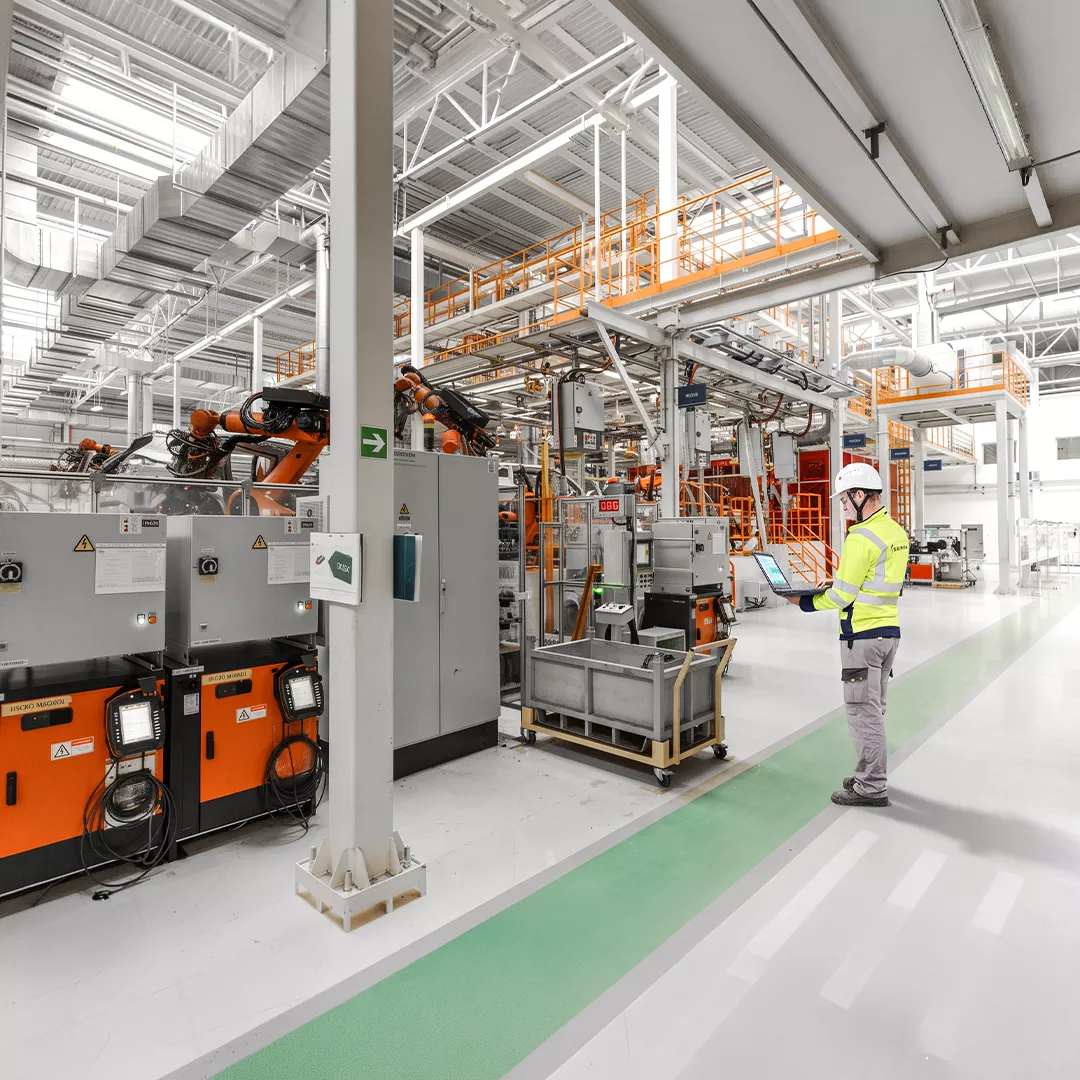
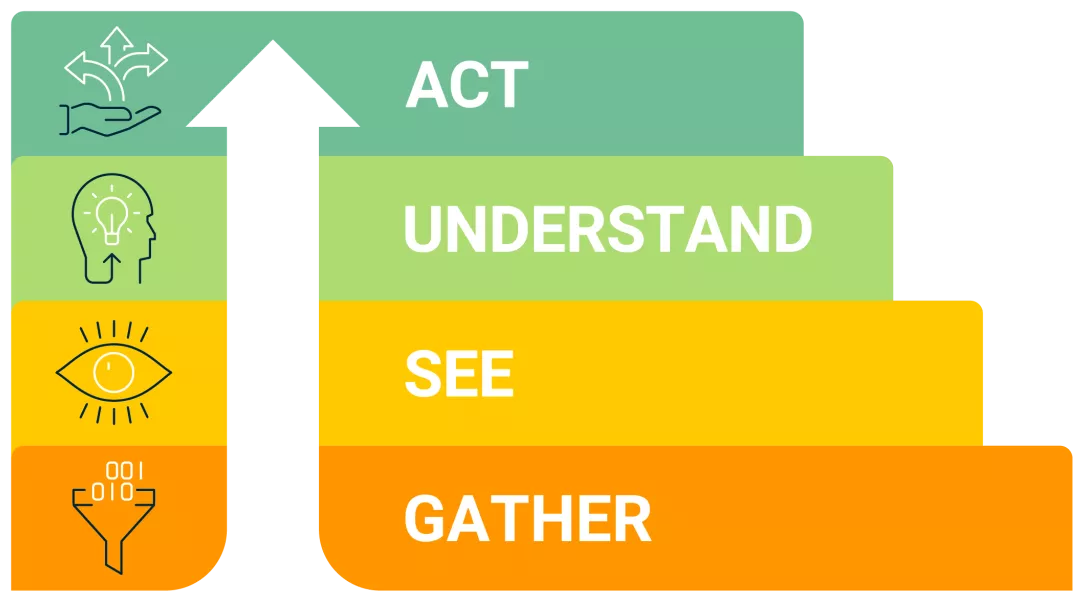
Our unique approach
1. GATHER: understanding what is really happening
Together, we analyse your production and logistics environment: throughput, manual operations, ergonomics, downtime, quality losses, workforce challenges and material flows.
2. SEE: making bottlenecks visible
Through analyses, audits, simulations and, where relevant, 3D visualisations, we map the current situation and potential future solution. This allows you to evaluate a concept before it is implemented.
3. UNDERSTAND: from technical concept to business case
We determine where automation truly creates value and develop the most suitable solution. We also assess risks against applicable machine safety standards and provide clear insight into the expected ROI.
4. ACT: delivering and supporting
Following validation, we take care of engineering, integration, commissioning, training, maintenance and lifecycle support. A single project team and one project manager guide the entire process. Implementation is aligned with your production schedule to minimise the impact on existing output.
Integration as the foundation
A robot cell that performs exceptionally well but does not communicate with your existing WMS, MES or PLC environment ultimately solves very little. That is why integration is not the final step, but a core competency. As a technology-independent integrator, we select the technology that best fits your application. Interfaces with existing WMS, MES, ERP and PLC systems are incorporated into the design and tested as part of the overall solution. Existing or organically grown environments are not the exception, but often the starting point.
You also benefit from a single point of contact throughout the entire journey. One project team. One project manager. One point of accountability. From Robotics and autonomous transport to vision, AI, automation and maintenance.
Automation & Robotics Scan
Discover through our fast Quick Check how automation and Robotics can make your processes more efficient, safer and more productive.
The benefits of “a robot”
The exact business case varies from one application to another. What always remains central, however, is identifying where automation can have the greatest impact. At the same time, the role of operators evolves. Repetitive handling tasks make way for supervision, quality assurance and process optimisation: activities where experience and human expertise create the greatest value.
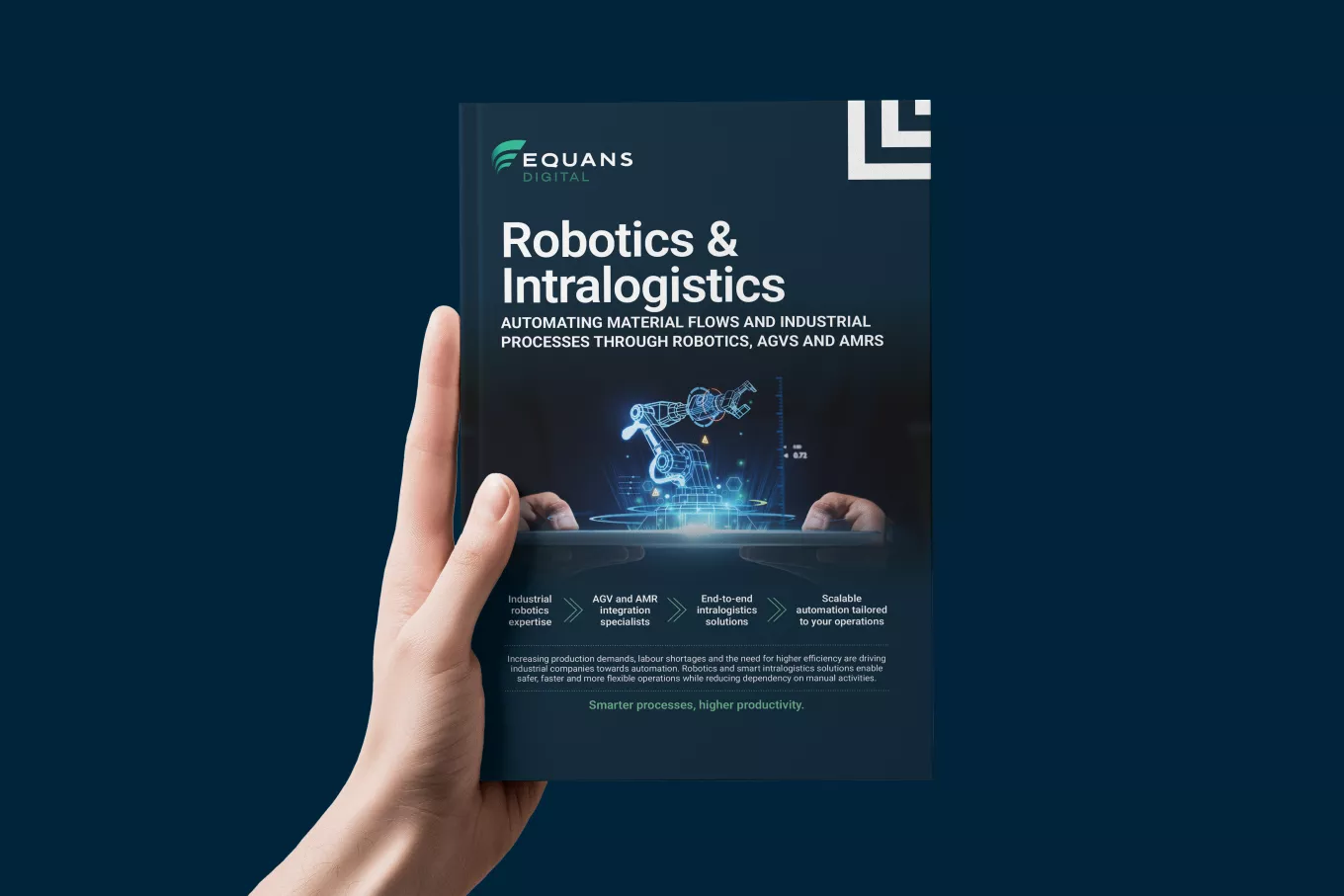
Download our brochure
Would you like to find out more about our Robotics solutions?
Inspiration and succes stories
Discover the strategy behind Robotics and get inspired by the success stories of others.
Frequently asked questions about Robotics
Do you have questions about our Robotics solutions and related services? We are here to explain everything clearly and simply.
Can't find what you're looking for?
Most organisations do not start from Robotics. They start from a problem that has become expensive: variation that shows up as scrap and complaints, a bottleneck that caps the output of an entire line, documentation a customer or auditor now requires that manual registration cannot deliver, handling that is unsuitable for people, or a position that stays vacant. Automation becomes relevant when one of those costs more every month than solving it does.
That depends entirely on scope, from a new camera inspection system, a single robot cell around one machine to an integrated line with vision, testing and automated transport. As an indication, projects typically range from € 15.000 to € 2.500.000. Rather than a list price, we give you an indicative investment range and payback period based on your own figures, as part of the R.O.I. Scan (Robotic Optimisation and Intelligence scan).
The best way to assess the value is through a data-driven business case. Our R.O.I. Scan (Robotic Optimization and Intelligence scan) analyses your throughput, staffing, quality losses and bottlenecks, and delivers a quantified ROI, a prioritized roadmap and an indicative investment and payback period. It sits deliberately before the investment decision, so you know what automation is worth before you commit budget.
From approved business case to production, a single robot cell typically takes 1-3 months and an integrated line 1-6 months. The main variables are component lead times, the amount of interfacing with existing systems, and the window available for installation. The planning is agreed at project start, including the moment your production is affected.
In practice, automation takes over work that is repetitive, physically demanding, hard to staff or low in added value. Operators move to supervision, quality assurance and process optimisation, where their expertise adds the most value. Roles do change, and we say so openly: training is part of every project. In most of our projects the trigger is work the customer cannot staff or cannot perform consistently, not a reduction in headcount.
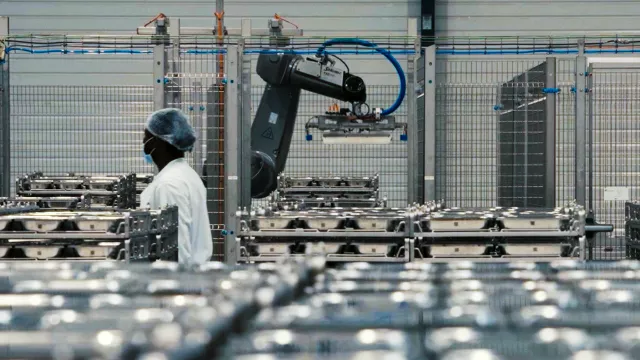
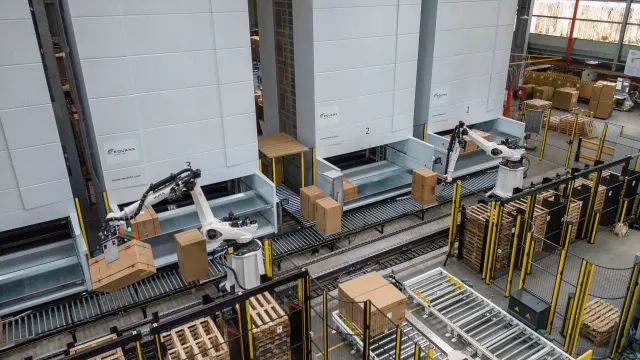
Typical applications include machine loading and unloading, material handling, palletising and depalletising, vision-based inspection and sorting, testing and measurement with automatic registration, assembly operations, and automated transport between process steps. As a rule of thumb: if a task is repetitive, well defined and physically demanding, it is worth assessing.
Yes! And older, grown-together systems are the normal starting point rather than the exception. We integrate with the PLC, ERP, MES and WMS environments you already run, and the interfaces are specified before you commit and tested against live data, so compatibility is settled on your own data before anything is built.
The installation itself is tested at our workshop before it reaches your floor, commissioning is scheduled in a window you agree with, and where the process allows, your current manual method keeps running in parallel until the new one has proven itself. The changeover is a planned step, not a leap of faith.
With an R.O.I. Scan (Robotic Optimisation and Intelligence scan). We map where automation delivers the highest return in your operation, and what it is worth, before you commit any budget.
Contact
Find out more?