

Facility Management as an Accelerator of the Energy Transition
Facility Management as an Accelerator of the Energy Transition
The new strategic role of facility management
The energy transition is no longer a topic reserved for energy or sustainability teams. Today, it touches the very core of business operations: costs, continuity, risk management, compliance, talent attraction and corporate reputation. That is precisely why facility management deserves a central role. Not as “building management”, but as a strategic cockpit where buildings, users and technology converge, and where tangible progress is made in energy performance, CO₂ reduction and ESG objectives.
Today, the facility manager operates at the intersection of buildings, users and technology. They manage maintenance, energy, comfort, cleaning and mobility, domains that collectively account for a significant share of an organisation’s carbon footprint. As a result, sustainable facility management becomes a powerful lever to improve the energy efficiency and climate performance of buildings, especially as organisations are now required not only to define ESG targets, but also to deliver and report on them.


The reality: many buildings are not (yet) ready for tomorrow
The challenge is substantial. A large share of the existing building stock does not meet future energy and sustainability standards. Many organisations struggle with ageing infrastructure, limited investment capacity and a strong focus on short payback periods. On top of that, complex ownership structures and evolving regulations often slow down decision-making. The result? Too many organisations remain stuck in fragmented, short-term measures that fail to deliver lasting impact.
The real question is therefore not whether to invest, but how to make the right investments at the right time, maximising return, minimising disruption and following a roadmap that is both realistic and executable.
Facility management: a key position in energy management
Facility management has a unique asset: access to the data behind the energy bill. Consumption profiles, peak loads, standby losses, comfort complaints and occupancy rates reveal the true performance of buildings. When these insights are intelligently linked to both costs and CO₂ impact, the biggest improvement opportunities become immediately clear.
By connecting data to financial and carbon indicators, energy shifts from being a purely operational expense to a strategic lever for business competitiveness.
What does this mean for decision makers? Facility management is evolving from an execution role to that of a strategic advisor, one that translates risks such as price volatility, grid constraints and supply security into decisions that protect and strengthen the business.
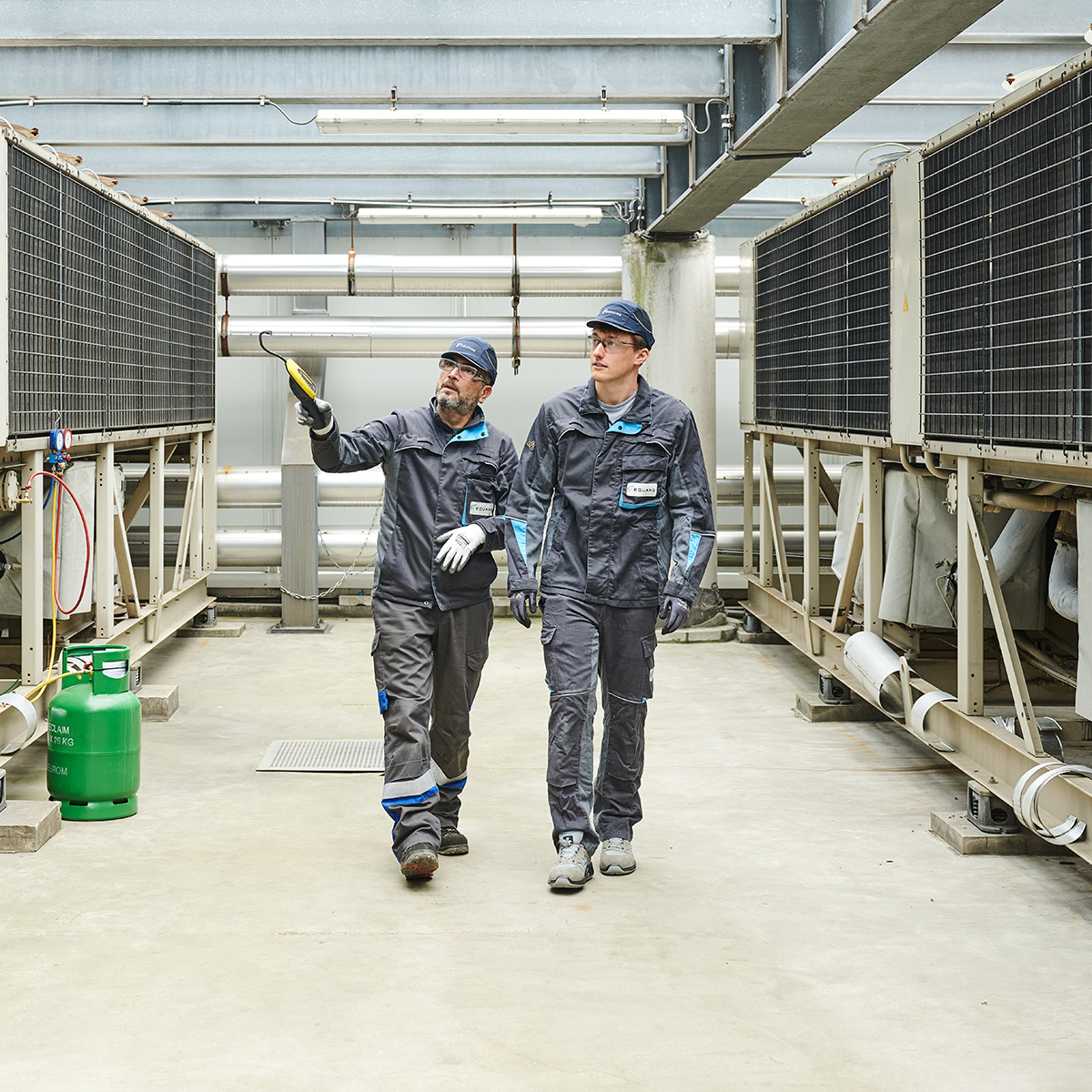
Why waiting is more expensive than acting
Delaying action comes at a cost. Inefficient buildings lose value. Stakeholders - customers, investors and employees alike - expect measurable progress. And as technical issues accumulate, interventions inevitably become more complex and expensive. Organisations that invest proactively create a structural advantage: lower operating costs, greater resilience and a stronger ESG profile that supports their market position.
From quick wins to a
future‑proof master plan
Achieving real impact requires more than isolated actions. It calls for an integrated roadmap that aligns technology, infrastructure and actual building use. Such a trajectory typically follows four logical steps:
- Energie- en comfortdata verzamelen en interpreteren
- Verbruik en pieken verklaren (waarom gebeurt wat er gebeurt?)
- KPI’s bepalen voor kosten, CO₂ en prestaties
- Fine-tune system settings and controls
- Improve occupancy and comfort management
- Transition from reactive to predictive maintenance
- Start with the fundamentals: building envelope (insulation, airtightness, glazing)
- Upgrade technical systems: heat pumps, high-efficiency HVAC, LED lighting
- Electrify applications where technically and economically feasible
- On-site generation (solar PV) and storage (batteries)
- Smart energy management for peak shaving and load shifting
- Prepare for grid congestion and flexibility services
A crucial principle applies throughout: without a high‑performance building envelope, technical solutions deliver suboptimal results. Accelerating sustainability therefore starts with strong foundations, followed by intelligent control and electrification.
The added value of Equans: from strategy to execution, with measurable results
Because facility management operates at the crossroads of multiple disciplines, it requires a partner capable of integrating OT/IT, building technologies and energy expertise into one coherent approach. This is where Equans makes the difference.
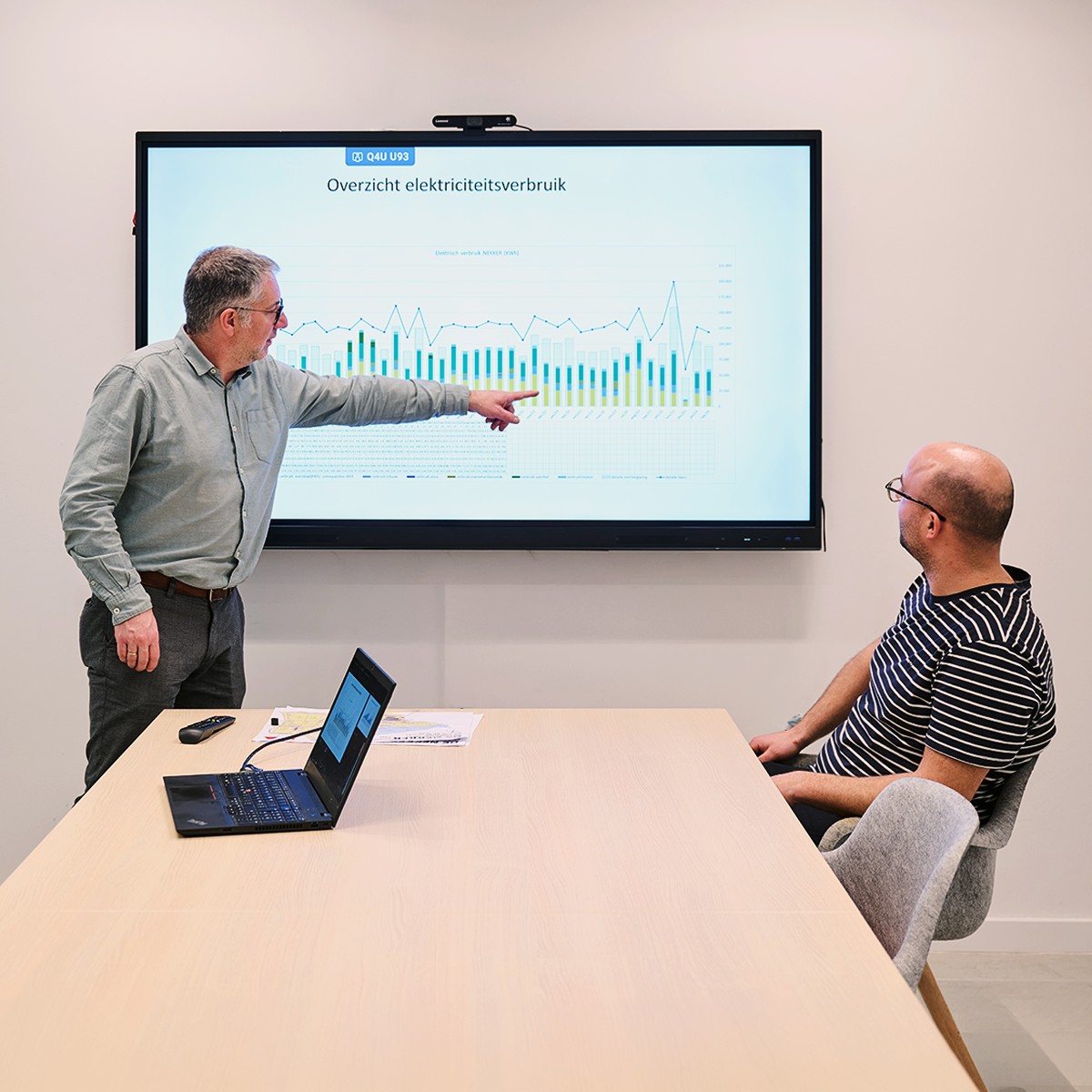
What you can expect from Equans:
- End‑to‑end support: from audit and roadmap definition to engineering, implementation, maintenance and continuous optimisation
- Data‑driven building performance: integration of building management systems, sensors and monitoring to improve energy efficiency, comfort and availability simultaneously
- Decarbonisation with a business case: prioritising measures based on both ROI and CO₂ impact, making sustainability financially viable
- Operational continuity as a starting point: implementations with minimal disruption and maximum reliability, essential in critical environments
- Governance & reporting: clear KPIs, reporting and follow‑up aligned with ESG requirements and executive-level decision-making
In short, Equans helps facility management evolve from an execution role into a strategic orchestrator, using technology as an enabler and delivering performance that can be objectively demonstrated.
Facility management belongs at the executive table
The energy transition is won in practice: in buildings, assets and processes. That is precisely where facility management operates. If you want to control energy as both a cost and a risk, future‑proof your real estate portfolio and deliver on ESG ambitions, the conclusion is clear: facility management must have a permanent seat at the decision-making table. Because organisations that make their buildings smart, healthy and efficient today, build competitive advantage for tomorrow.

Ready to unlock the strategic value of facility management?
Equans is ready to support you with:
- an energy and CO₂ roadmap for your buildings,
- a data‑driven optimisation trajectory,
- and an investment plan that is both realistic and impactful.

5 questions every CEO should ask their facility management team today
Detailed insights into consumption profiles, peaks, standby losses and occupancy are essential. Without them, strategic decisions remain guesswork.
Ask for the ROI of concrete measures (optimisation, renovation, electrification, digitalisation) and the timeframe in which their impact will materialise.
With stricter standards, growing reporting pressure and possible grid congestion, compliance is no longer a nice‑to‑have, it is a strategic necessity.
A modern building cannot operate efficiently without smart controls, sensors, monitoring and automation. Ask which data is already available and which decisions it supports.
From building envelope to heat pumps, batteries or digital control systems: the question is not if, but when. A clear roadmap provides direction, prioritisation and budget predictability.
Contact